
In this issue: Updates on COV&R’s annual meeting, other forthcoming events, a report on a Girard seminar in Spanish, and a review of Cesáreo Bandera’s last book
Contents
Letter from the President: Nikolaus Wandinger, Thinking of Carnival / Carnival of Thinking
Editor’s Column: Curtis Gruenler, Unified Sports
Theology and Peace Spring Events
Generative Anthropology Summer Conference, Stockholm, June 22-24, 2026
Creative Interruption: A Theology and Peace Gathering, Chicago, July 7, 2026
COV&R Annual Meeting, Chicago, July 8-11, 2026
COV&R at the American Academy of Religion, Denver, Nov. 21-24, 2026
Event Report: Juan Sebastián Ballén Rodríguez, Girard in Spanish: Annual Seminar on Mimetic Theory
COV&R Partner Spotlight: Suzanne Ross, New Podcast: Third Things First
Andrew McKenna, The Truth of Mankind: Reflections on Girardian Theory by Cesáreo Bandera
Letter From the President
Thinking of Carnival / Carnival of Thinking
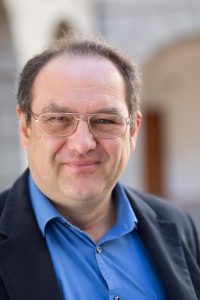
Nikolaus Wandinger
In many places—most likely in those that have been molded by Catholicism—carnival is an important time of the year. In parts of Germany it is called the fifth season beside winter, spring, summer, and fall. It officially starts on November 11 at 11:11 a.m. and ends at 12 a.m. on Ash Wednesday, which this year was February 18. Different countries and regions have quite diverse customs: in some regions people wear luscious costumes, in others gruesome witch masks, in others political institutions or personnel are mocked. What carnival customs have more or less in common is that the normal order of things is put upside down; the rules that normally apply are suspended, even reversed. Yet, this does not happen spontaneously. It is carefully scripted, new rules apply that have to be followed, and when it is over on Ash Wednesday, everything goes back to normal and Lent begins. In some places an effigy of Carnival is symbolically buried to end the season. One could say that a mimetic crisis is symbolically enacted, at the end the victim is put in a grave, and then order is restored.
I am not going deeper into the subject because famous and long-standing COV&R members have written much more elaborate things about carnival already quite a while ago (see Jean-Pierre Dupuy, “Tangled Hierarchies: Self-reference in Philosophy, Anthropology, and Critical Theory,” Comparative Criticism 12 (1990): 105–123 and “The Self-Deconstruction of the Liberal Order” Contagion 2 (1995): 1–16). I am mentioning it, though, because when looking at international and national politics in many countries around the globe, one could get the impression that we are in a kind of continuous carnival: old structures and established orders have been suspended or even reversed; things that would have been unthinkable a few years ago seem to have become commonplace. And yet, there are a few things that quite clearly distinguish this situation from carnival: it might very well be scripted but it is not just a symbolic enactment—it is very real, and there are real victims. It is hard to say whether there are new rules or just no rules. And it is very doubtful whether there will be an Ash Wednesday after which the normal order simply is restored. Something will have changed.
As the Colloquium on Violence and Religion, we are well positioned to observe, analyze, and partly explain these phenomena, but, I am afraid, we have very little influence on them. And yet, when the world seems to be upside down, all who are not upside down but remain standing firm on their feet counteract the upheaval. Therefore I am very glad that this week was also the week in which the conference registration for our upcoming conference in Chicago opened. Maura Junius and Martha Reineke have put together a tremendous outline. What we can do as COV&R is to continue our work in analyzing mimetic mechanisms and how they work to entice humans to violence, and what role religion or ideology posing as religion plays in the process. By doing that we are also supporting practitioners who do more than analyze. As a theologian I focus right now particularly on the following: Christianity as a whole never completely overcame sacred sacrificiality, but the revelatory impulse of the Bible had dethroned it, and in the second half of the 20th century it was relegated to the sidelines. Today, there is a strong movement that aims at reversing that process and at making sacred sacrificiality again central in Christian thinking. The question is whether religion can overcome violence by subverting it (as René Girard, Raymund Schwager, and others have argued for Christ and the Suffering Servant of Isaiah) or whether it merely “contains” violence, or even worse, whether it uses the containment of violence as a pretext for instigating it. I am quite sure that discussing theatre, art, and architecture in Chicago will also help us to get a clearer focus on these questions, as the strong point of COV&R is its interdisciplinarity.
Therefore I am looking forward to this conference (see further announcement below) and hope to see many people there: COV&R members, interested persons from academia, practitioners, and persons engaged in the arts.
Editor’s Column
Unified Sports
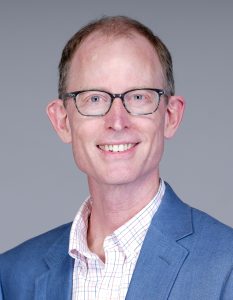
Curtis Gruenler
COV&R’s 2026 annual meeting in Chicago promises to open new directions for thinking with mimetic theory. (See the full announcement below and complete information, including the call for papers, on the conference website.) Along with the announced focus on architecture, theater, and visual arts, I have been thinking about another mode of how we share spaces together: sports. Chicago is a great sports town—and will be even greater if the Chicago Fire soccer team succeed in signing Robert Lewandowski.
I’m not thinking of professional sports, however, but rather of Unified Sports. In Unified Sports, teams are made up of roughly equal numbers of people with intellectual disabilities, called athletes, and without intellectual disabilities, called partners. Special Olympics has focused its development of Unified Sports within school settings, aiming to promote inclusive relationships on the basketball court or soccer field that will permeate the rest of the institution.
Magical things happen when the goal of playing becomes including everyone in the play. Games are still competitive, but competition is subordinated to connection. While players move around the play space together, passing the ball, barriers to communication recede and an experience of cooperation across differences of ability emerges and becomes a seed for friendship beyond the play space as well.
I learned about Unified Sports from my friend and colleague Dennis Feaster, who teaches in the Social Work program at Hope College and researches communities of care for people with disabilities. We have been cooking up a research project that would use mimetic theory to understand and articulate what makes Unified Sports work. How do bodies in collaborative play serve as models of desire? For the players, how does the experience of Unified Sports compare to other sporting activities? How do relationships develop beyond the field of play? How might the structures that induce positive mimesis in Unified Sports translate to other contexts?
Dennis and I would be interested in talking with others who are bringing mimetic theory to the experience of sports and play or to the inclusion of those with disabilities. If you’re thinking of coming to the Chicago conference, we could set up a meeting. If you’d like to explore possibilities, please email me.
As always, proposals on all topics related to mimetic theory are welcome in addition to the conference theme. Proposals are due March 30, 2026.
COV&R News
New books: The Revelatory Power of Mimetic Theory: Reading René Girard, Texts and the World, a collection of articles edited by Benoît Chantre and Paul Dumouchel and originating in the 2023 Paris conference celebrating the centenary of Girard’s birth, jointly organized by COV&R and Association Recherches Mimétiques, is now available from Bloomsbury. Federica Casini has published Un senso invincibile e inespugnabile: René Girard critico letterario with Le Cáriti Editore.
Book discount: COV&R members can receive a 20% discount on recent books from two series published by Michigan State University Press: Studies in Violence, Mimesis & Culture and Breakthroughs in Mimetic Theory. This includes the most recent title, Così fan tutte, An Opera of Mimetic Revelation by Isabel Díaz-Morlán. In addition, a 30% discount is available on selected titles from the backlist with a purchase of three or more. For more information, please see this page in the members section of the COV&R website. The same page includes a discount code for ordering through Eurospan, which has better shipping rates when ordering from Europe than ordering directly through MSUP.
Ongoing read-aloud: The read-aloud-and-discuss Girardian Zoom group is reading From Violence to Blessing: How an Understanding of Deep-rooted Conflict Can Open Paths of Reconciliation, by Vern Redekop. Meetings are Monday nights from 6:30 to 8pm Central Time, with pre-reading chat beginning at 6pm. Julie Shinnick has copies of the book in pdf form if anyone needs one. You can read about the book on its amazon.com page. If you are interested in participating, please email Julie.
Forthcoming Events
Theology and Peace Spring Events
Join Theology and Peace for these exciting upcoming online events! We meet every First Thursday evening at 7:30 PM (ET) via Zoom. Events are free, but you need to register for each with Humanitix to receive the link.
March 5: Quarterly Speakers’ Series—Andrew Lang on “Somatic (Body) Work and Creative Resistance: Increasing our Capacity Amidst Multiple Crises” (description below)
April 2: Mimesis @ the Movies film discussion (film TBA). Past events are listed on our Humanitix page.
May 7: Quarterly Speakers’ Series—Dr. Vanessa Avery of Sharing Sacred Spaces on Peacemaking and Polarization
June 4: Mimesis @ the Movies—a special live discussion with Dr. Julia Robinson Moore about a new documentary on her work called Charlotte Seven (description below)
Check out these and past events on the Theology and Peace Humanitix host page then sign up to receive notifications of all upcoming events!
Meanwhile, here’s a more detailed description of some of our spring speakers:
Andrew Lang, “Somatic Body Work and Creative Resistance: Increasing our Capacity Amidst Multiple Crises,” Quarterly Speakers’ Series online, March 5 at 7:30 PM ET
Everywhere we look these days, we experience individual and interpersonal as well as communal crises. In the midst of all these crises, how do we remain centered and what practices expand our capacity to stay present and engaged? The intersection of somatic (body) work and creative resistance can be a powerful place to begin. First, Andrew Lang will explore how our nervous system is impacted by exposure to all these intersecting crises. He will then share insights on the vitality of somatic awareness/embodiment in our changework—whether that’s through focusing more on internal change work, or through engaging in explicit activism. Changework can be defined as the disciplined labor of transformation—within persons, communities, or systems—undertaken with intention rather than left to chance. Andrew stresses cultivating practices of gentle change alongside fierce commitment—and how important community is to our own individual and group becoming. We will conclude with some practical exercises designed to increase our bodily awareness as we shape change in our communities and engage with our world.
Andrew Lang is an educator in the Pacific Northwest and alumnus of the Living School for Action and Contemplation in Albuquerque, NM, where he studied under Richard Rohr, Cynthia Bourgeault, James Finley, Barbara Holmes, and Brian McLaren. Balancing the importance of inner work with activist practices that shape change and healing in our communities, he writes the weekly Gentle Change newsletter and regularly facilitates workshops and speaks to cohorts of folks just dipping their toes into the world of activism. He is also the author of Unmasking the Inner Critic: Lessons for Living an Unconstricted Life. You can find more of his work and offerings at www.AndrewGLang.com.
Special Mimesis @ the Movies online discussion of a new documentary film on the work of the Rev. Dr. Julia Robinson Moore, June 4 at 7:30 PM ET, with a live Q&A time and discussion with Dr. Robinson Moore about her work
What happens when lost history is uncovered? Charlotte Seven, a new documentary directed by Billy Price and produced by Cowboy Collective, reveals the impact. The film explores the rediscovery of long-overlooked African American history in Charlotte, North Carolina, particularly the hidden legacies of Black churches and burial grounds displaced by urban development. For the past four years, the Rev. Dr. Julia Robinson Moore, a preacher, peacebuilder, and advocate, has led a diverse team of architects, students, and historians on a powerful mission: to restore dignity to forgotten African American burial grounds in Charlotte.
“The enslaved burial grounds are still there. They’re still neglected and they are sort of hidden in plain sight,” says Dr. Robinson Moore, a professor of African-American Religion at UNC Charlotte. As the director of the Preserving Sacred Spaces Initiative (PSSI) at UNC Charlotte, Dr. Moore provides substantive steps toward memorializing these historic sites, recognizing them as essential to understanding the complexities of Black and white race relations in the South. Born from Dr. Moore’s research on the role of the Presbyterian Church in Charlotte’s racial history, PSSI goes beyond restoration: it fosters reconciliation. Filmed verité style over four years, this documentary captures the initiative’s evolution in real time, following the emotional and deeply personal journeys of those working to reclaim these sacred spaces. Through intimate storytelling and observational footage, Charlotte Seven reveals the profound impact of uncovering and confronting forgotten history.
The Rev. Dr. Julia Robinson Moore is an ordained Presbyterian minister in the Presbyterian Church (U.S.A.) and serves as a Minister-At-Large in the Presbytery of Charlotte. Moore is also an Associate Professor of Religion at UNC Charlotte. Her teaching and research center on African American religion, peacebuilding, and the work of French literary theorist René Girard. Her first book, Race, Religion, and the Pulpit: Reverend Robert L. Bradby and the Making of Urban Detroit, highlights the history of the first Black Baptist church in Detroit, MI, and the making of the city’s black urban working class. As a scholar of African American religion and a minister within the Presbytery of Charlotte for over twenty-two years, Moore created a way for her research and ministry to directly enhance interracial relations within the Presbyterian communities she served through her non-profit organization, Moore Grace Ministries. Co-founded with her husband, Rev. Ricky D. Moore, Moore Grace Ministries promotes social well-being for the public good and stewards its signature project, Pathways for Peace, a community-based initiative that establishes strategic partnerships to support community sustainability through storytelling, education, memorialization, and the preservation of formerly enslaved burial grounds in Charlotte, NC.
Scenic Thinking and Group Behavior: Agency, Identity, Intelligence
19th Annual Generative Anthropology Summer Conference
Stockholm University, Stockholm, Sweden June 22-24, 2026
A call for papers and additional information are available here. Proposal are due May 1.
Creative Interruption: Transformative Testimony in Violent Times
A one-day Theology & Peace gathering ahead of COV&R 2026
The DePaul University Loop Campus, Chicago, Illinois July 7, 2026
We are living in an era when violence feels increasingly casual — and increasingly contagious. Many of us know how to name its patterns clearly. We can point to the polarization, scapegoating, dehumanization, and retaliation, and yet we feel uncertain about how to respond without descending into reactivity or numbness. We recognize what violence is doing. What’s less clear is how to live in ways that disrupt its escalation.
Creative Interruption is a one-day gathering for anyone ready to move beyond analysis. Hosted by Theology & Peace and designed for aspiring peacemakers who want to respond to violence without reproducing it. Creative Interruption brings together theological depth, historical nuance, lived practice, and ethical imagination in a setting designed for thoughtful engagement and community conversation.
Morning Presentation: Wolfgang Palaver, “Active Nonviolence at the Center of Just Peace”
Christian peace ethics shifted in recent decades from just war to just peace. The criteria of the just war tradition are still valid but the center of peace ethics now focusses on peace and not on war. At the center of the concept of just peace is active nonviolence. Christians have learned from Gandhi that the Sermon on the Mount focuses not on nonresistance but on active nonviolence. A final part will address what just peace means for the relationship between church and state by referring to Dietrich Bonhoeffer’s interpretation of the katechon (restrainer).
Wolfgang Palaver is Professor Emeritus of Catholic Social Thought at the University of Innsbruck, Austria, where he taught from 2002 until 2023 and where he was also Dean of the Catholic Theological Faculty from 2013 until 2017. He is an expert on the relationship between violence and religion and on Christian peace ethics. He is President of Pax Christi Austria since 2019 and became in March 2025 Personal Representative of the Organization for Security and Co-operation in Europe Chairperson-in-Office on Combating Racism, Xenophobia and Discrimination, also focusing on Intolerance and Discrimination against Christians and Members of Other Religions.
Afternoon Workshop: Center for Story & Witness, “The Role of the Witness in Breaking Cycles of Violence”
The nonprofit Center for Story & Witness is dedicated to cultivating and sharing stories that bear witness to gender-based violence and other injustices. The Center’s co-founders, R. Clifton Spargo and Anne K. Ream, will lead an interactive seminar detailing best practices in generating, collecting, and sharing testimony. In recent years, witness writing and oral testimony have come to be recognized as essential elements in social justice movements. Testimony challenges and rewrites our idea of ourselves and our society. Spargo and Ream will share what they’ve learned through their award-winning testimonial writing program and engage session participants in writing exercises modeled on the workshop. The session will reflect on the role testimony plays in educating the public on social, political, and interpersonal violences and how testimony defines and defends the human rights of victims of violence. Encouraging participants to contemplate acts of bearing witness in their everyday lives, thus blending personal experience and ethical imagination, the session will explore novel ways of incorporating testimony and storytelling into teaching, advocacy, and other professional practices.
During the Q & A session, we will discuss the relationship of creative witness to mimetic violence, the ways testimony and witness disrupt the unanimity of the crowd and diffuse escalation, while also avoiding the negative contagions that solidarity may be prone to.
Register here.
COV&R Annual Meeting
In the Loop of Mimetic Desire:
Theatre, Art, and Architecture in Chicago
Chicago, Illinois
July 8-11, 2026
If you’ve attended previous meetings of the Colloquium on Violence & Religion, you already know what makes COV&R distinctive: genuine intellectual hospitality and conversations that continue long after the sessions end. So, the question isn’t what COV&R is. The question is: Why come to Chicago in 2026?
Because Chicago will be different.
From July 8–11, 2026, COV&R gathers in the heart of downtown Chicago under the theme “In the Loop of Mimetic Desire: Theatre, Art, and Architecture in Chicago.” This is not simply a new location for COV&R for the annual meeting. It is a deliberate invitation to extend mimetic inquiry beyond texts and theories into lived, embodied, and visual experience.
This year’s theme asks us to examine how mimetic desire operates in performance, in built space, and in the visual imagination. What happens when we consider theatre not only as representation but as mimetic intensification? How does architecture shape collective desire and rivalry? What does it mean to interpret a skyline, a stage, or a gallery as a site that attests to the sacrificial or to reconciliation?
Chicago makes these questions unavoidable.
The Loop’s architectural landmarks, historic theatres, and world-class museums create a setting where scholarship and environment speak to one another. The city becomes part of the argument. Between sessions, conversations will spill into streets shaped by modern architectural innovation and into cultural spaces where performance and desire are on display. For participants, this offers something fresh: a conference that thinks spatially and aesthetically, not only textually.
The 2026 program is intentionally interdisciplinary in a way that pushes the edges of prior meetings. Scholars working in the humanities and social sciences will be joined by voices working in performance studies, visual culture, and architecture. Expect concurrent sessions that cross traditional boundaries and plenaries that open new methodological questions for mimetic theory’s next phase. An introductory bibliography is posted with the call for papers to facilitate this engagement.
Several opportunities exist at COV&R 2026 for those particularly attuned to the application of mimetic theory in daily life. There will be a practitioner luncheon and sessions highlighting how members of our COV&R community who do not have full-time academic appointments continue to draw on mimetic theory in the context of their lives and careers. Consider also coming early for the pre-conference workshops with our partners Theology & Peace and Sharing Sacred Spaces. These sessions are designed for immersive dialogue, pedagogical reflection, and applied exploration of mimetic concepts. If you have ever wished for more sustained conversation with fellow practitioners at COV&R, this is your opportunity.
Financial considerations? COV&R continues to offer travel grants, helping offset costs and registration fees. The Raymund Schwager, SJ Memorial Essay Prize remains a powerful incentive to participate—and a meaningful way to mentor the next generation into the conversation.
All this and more, including the registration form, information about our slate of plenary speakers, lodging suggestions, transportation tips, and advice for international visitors to the US are addressed on our recently updated meeting website. The Call for Papers closes March 30. Early Bird Registration ends April 15.
A contract has been signed for the closing night banquet at the Chicago Architecture Center, which will follow the social event: a Chicago River Cruise led by a Chicago Architecture Center docent. The river tour by the CAC is the top-rated tourist attraction in Chicago.
Still wondering if you should come to Chicago? Perhaps the most compelling reason to put COV&R 2026 on your calendar is this: Mimetic theory itself is at a moment of expansion. As global tensions intensify and visual culture accelerates imitation at unprecedented speed, Girard’s insights are proving newly urgent. Chicago 2026 will not simply revisit established themes; it will test how our shared intellectual framework speaks to the current moment.
If you have benefited from past COV&R meetings, consider this one an investment—not only in your own research, but also in the ongoing vitality of the community that has shaped it. Chicago is not “more of the same.” It is a step forward. We hope you’ll step into the Loop with us.
Co-Coordinators: Maura Junius and Martie Reineke
Sponsors: Imitatio, Street Psalms
Local Host: Prof. William Kavanaugh, DePaul University
COV&R at the American Academy of Religion
Denver, Colorado
November 21-24, 2026
The Colloquium on Violence & Religion welcomes both individual paper proposals and panel proposals addressed to the following topics:
- Proposals that explore how mimetic theory interacts with climate change
- Proposals that explore how violence is communicated in various contexts. Papers may address theoretical frameworks, case studies, or propose new methods for understanding and communicating about violence.
- Proposals that address the experiences, challenges, and innovative approaches in teaching Mimetic Theory. We seek papers that discuss pedagogical strategies, curriculum development, and student engagement.
- Proposals that bring Mimetic Theory into dialogue with other disciplines. Papers might explore intersections with psychology, sociology, literature, or other fields.
- Proposals that engage with the concept of epistemic violence within post-colonial discourse, examining its relationship with Mimetic Theory. Contributions may focus on theoretical analysis or specific case studies.
Proposals are due Friday, March 6, by 11:59pm ET and should be submitted through the AAR website. Presenters must be members when they present.
Event Report
Girard in Spanish:
Annual Seminar on Mimetic Theory
Juan Sebastián Ballén Rodríguez, PhD

On December 11, 2025, the Annual Seminar on Mimetic Theory was held online via Zoom. Organized by the Faculty of Philosophy at the Pontificia Universidad Javeriana in Bogotá, Colombia, the seminar ran from 8:00 a.m. to 6:00 p.m.
The event marked the tenth anniversary of the death of René Girard (1923–2015), whose work continues to inform discussions of mimetic desire, violence, and the scapegoat mechanism. The seminar was coordinated by Professor Roberto Solarte Rodríguez and livestreamed on the Faculty of Philosophy’s Facebook page, allowing open access for a Spanish-speaking academic audience based in multiple countries.
Objectives and Thematic Focus
The seminar provided a forum for the presentation and discussion of recent research and publications related to Girardian thought in the Spanish language. It focused on the contemporary relevance of key concepts of mimetic theory—mimetic desire, originary violence, sacrifice, the scapegoat mechanism, and religion—and on their application across a range of disciplines, including philosophy, literature, political science, anthropology, cultural studies, and media analysis.
Presentations were limited to twenty minutes, enabling a wide range of perspectives to be addressed within a single day and supporting sustained thematic continuity across sessions.
Program and Main Themes
The program included sixteen papers presented in morning and afternoon sessions, followed by a concluding editorial segment. The principal thematic areas were as follows:
Theoretical Foundations and Philosophical Dialogues
Several papers addressed the conceptual foundations of mimetic theory and its dialogue with other philosophical traditions. Roberto Solarte Rodríguez opened the seminar with “Mimetic Theory in Latin American Thought,” examining Girard’s reception within Spanish-language philosophical contexts. Adriana Ruelle Gómez presented “Phenomenological Approaches to Positive Mimesis from Merleau-Ponty,” while Juan Manuel Hernández Aguilar discussed “Hermeneutic Phenomenology as a Path toward Girard.” Gustavo Sanabria Galvis explored contemporary intersections in “Metaphysics, Desire, and Violence in Byung-Chul Han and René Girard.” Critical engagements with mimetic theory were also offered by Stéphane Vinolo in “The Objectual Prison of Mimetic Theory,” and by Aranza Rubio Osorni in “Envy in North America during the 1990s.”
Historical and Political Analyses of Collective Violence
Several contributions applied Girardian categories to historical and political contexts marked by crisis and collective violence. Palmira Arias López analyzed “The Rwandan Genocide as a Sterile Sacrifice.” Jonathan Paul Álvarez Torres examined “Undifferentiated Violence and Genocide in the Colombian–Venezuelan Llanos,” drawing on Las guajibiadas by Silvia Aponte. Jorge Márquez Muñoz proposed an institutional reading in “The United Nations as Scapegoat: The Case of Boutros-Ghali.” Fernanda Martínez Cadena explored “Mimetic Times” in the early twentieth century, while David García-Ramos addressed democratic crisis in “María Zambrano and the Democratic Crisis as a Sacrificial Crisis.”
Literature, Art, and Cultural Representation
The aesthetic and literary dimensions of mimetic theory were prominently represented. Juan Felipe Rivera Pardo offered “A Reinterpretation of Sacrificial Practice in Euripides’ Heracles” David Felipe Franco Santamaría analyzed “Mimetic Tragedy in Stefan Zweig’s Confusion of Feelings.” Juan Manuel Díaz Leguizamón reflected on “The Artist as Pharmakos and the Arts as Sacrificial Rituals.” Contemporary media representations were addressed by Martha Clarissa Moreno Alcántara in “Black Mirror: Identity and Mimesis.”
Theological Perspectives
Aider Jiménez Moreno presented “Spirituality and Philosophical Anthropology: The Place of the Gospels,” focusing on the theological dimension of Girard’s work, particularly his reading of biblical texts as a disclosure of the scapegoat mechanism.
Editorial Session
The seminar concluded with the presentation of three recent publications related to mimetic theory:
- Memoria de futuro: perspectivas de la memoria amorosa de las víctimas del conflicto armado en el Magdalena Medio, a collective volume by Roberto Solarte Rodríguez, Jonathan Paul Álvarez Torres, Fernando Cruz Artunduaga, Rubén Darío García Escobar, and Adriana Ruelle Gómez, presented by the latter two.
- La violencia en Colombia: aproximación desde una antropología teológica cristiana en clave de la teoría mimética de René Girard, by Dairon Lizcano Barajas, S.J.
- Otras lógicas de comprensión en la filosofía contemporánea. Estética, lenguaje e historia, by Juan Sebastián Ballén Rodríguez.
These publications reflected ongoing editorial work on mimetic theory within the Spanish-language scholarly community.
Conclusion
The seminar illustrated the continued relevance of René Girard’s thought ten years after his death. The range of topics addressed—from genocide studies to contemporary media analysis—demonstrated the adaptability of mimetic theory to diverse research contexts. The participation of scholars from different disciplines and academic generations highlighted the consolidation of an international Spanish-speaking community engaged in sustained work on Girardian theory.
COV&R Partner Spotlight
New Podcast: Third Things First
Suzanne Ross
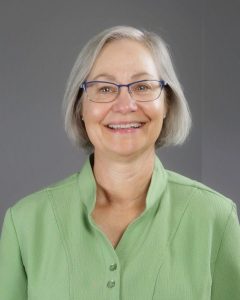
COV&R members Suzanne Ross and Lyle Enright have started a new podcast, Third Things First, and the Bulletin asked Suzanne a few questions about it. Suzanne can be reached through the Wicked Truth website, Substack, Facebook, Instagram and now YouTube!
What’s the vision for the new podcast?
We want the podcast to be a place to renew hope in a peaceful future. Despite what the headlines might lead us to believe, the future is not irredeemably bleak. In fact, there is something hopeful about the threats to peace we are now facing. Though many have said Girard’s last book, Battling to the End, was a doomsday prophecy, I don’t think that’s the whole story. I see hope embedded in Girard’s prophetic warnings about the escalation to extremes: “The apocalypse does not announce the end of the world; it creates hope…. Hope is possible only if we dare to think about the danger” (xiii).
Of course, the reality of violence, hatred, and abuses of power may cause us to lose hope. If that happens, then instead of rolling up our sleeves, we will sit on the sidelines as wickedness overruns our world. For Girard, his hope was nurtured by Christ who revealed a God who suffered violence rather than inflict it. That faith animates me as well though it needs nourishment and renewal! When I have connected with the people who are choosing the path of peace right now, in the midst of our troubled world, their efforts give me good reasons to hope because they are forging a better future for their communities in the here and now.
Our idea for Third Things First is for our audience to meet those people and hear their stories of living with the danger of violence in their communities and discovering ways to build a shared future where former enemies can flourish together in peace. Their stories can serve as models for how we can be peacebuilders in our own communities.
What do you like about the podcast format?
Most of our planned guests have written about their faith, their commitment to nonviolence, and the experiences they have had as peacebuilders in troubled contexts. Because podcasts are conversations, listeners can get to know the person behind the writing. I think listeners are interested in how a guest’s life story led them to take on the difficult task of peacebuilding. Not all of us go into peacebuilding as a profession, but I believe all of us are called to be peacebuilders wherever we find ourselves on life’s journey. My hope is that each of us can learn something from these conversations that we can apply in our own lives as we seek a more peaceful future for our context.
How is this an outgrowth of unRival and/or The Raven Foundation?
The Third Things First podcast is part of the work that my husband Keith and I have been doing since 2007 to share the impact the mimetic insights have had on our lives. Through the Raven Foundation we have tried to share how our faith was revitalized through mimetic theology. That works continues today in partnership with Street Psalms. Through unRival Network we created communities of support for local peacebuilders in need of renewed hope. We were able to sustain unRival’s program work for four years. During that time we forged friendships and connections that continue to sustain us. My hope is that many of them will be guests on the podcast so that others can be sustained by knowing them as well.
Most immediately, however, the podcast is part of the content we are creating for our new website The Wicked Truth: Music, Magic and Witchy Insights into How to be Human. When the two-part film adaptation of the Broadway musical Wicked premiered in 2024, I decided it would be a good opportunity to revise my book about the musical to incorporate what I had learned about peacebuilding from my time at unRival. In addition to the podcast, I am sharing blog posts that put the themes of the musical about violence, rivalry, and scapegoating into conversation with current events. There has been a lot to write about!
We are planning to launch the revised edition as an e-book to coincide with COV&R’s Annual Meeting this year in Chicago. Readers of the Bulletin invited to the launch party we are planning for Monday, July 13—please consider extending your stay in Chicago to join the celebration! Details will be available shortly on The Wicked Truth website.
What episodes have you done so far?
So far we have completed interviews with Dr. David Anderson Hooker, Dr. Julia Robinson-Moore, and Rev. Dr. Brian Ammons. Dr. Hooker may be a new name to many of you. He is a scholar-practitioner from Atlanta whose MDiv thesis makes significant use of Girard on the topic of “liberating struggles for liberation from the myth of redemptive violence.” “While dialogue is almost always necessary,” Dr. Hooker maintains, it is “never sufficient to achieve transformation.” He has developed a tested methodology for moving communities in conflict or suffering from trauma through the necessary step of dialogue to a vision for a shared future and a plan to realize it. I am creating a study guide for the 2nd edition that introduces some of the key concepts in what he calls Transformative Community Conferencing (TCC) for leaders to use in their communities.
A central idea animating TCC and other peacebuilding efforts is the idea of a “third thing.” To defuse the rivalry and delegitimize violence, seasoned peacebuilders inject a third thing into the mix—a work of art that creates an opening to imagine something the rival sides haven’t been able to imagine before, a future where there are no winners or losers but where everyone can flourish with justice and peace. My approach to the musical Wicked is as a third thing that opens up the space for conversations so difficult we have avoided having them even with our families. At unRival and at The Wicked Truth, the arts are central our approach to creating the conditions for a more peaceful world.
Book Review
For inquiries about writing a book review or submitting a book for review,
contact the Bulletin editor, Curtis Gruenler.
The Truth of Mankind: Reflections on Girardian Theory
Reviewed by Andrew McKenna

Cesáreo Bandera
Angelico Press. 2026
211 pages
I hesitate to try to improve upon the lavish praise, mine included, that the blurbs by René Girard’s most eminent readers, religious and secular, advertise on the cover pages of Cesáreo Bandera’s The Truth of Mankind: Reflections on Girardian Theory. Yet its blunt title beckons further attention. The issues that the book raises involve the two main currents of Girard’s thought: the gulf stream of his anthropological hypothesis of human origins in the recourse to a scapegoat absorbing the runaway violence of our proto human community, labeled “mimetic theory” herein, and the North Star of biblical revelation. At issue are the fraught relations of science and faith, reason and revelation, that Western culture has been at pains to sort out since at least the Enlightenment. Bandera aims to “recalibrate,” as he writes, these relations, to set the record straight from within Girard’s writings and at times against them.
It is the case that Jesus is absent from the systematic critique of religion laid out in Violence and the Sacred. Many readers hailed this work as a thoroughly atheist debunking of religion. It is also the case that Girard held back from bringing Jesus into his argument out of apprehension that he would not be taken seriously if he made the straightforward profession of faith, the one that we find in Things Hidden Since the Foundation of the World and that variously delighted some of his readers and dismayed others. Violence and the Sacred appeared in the climate of thought dominating intellectual circles here and in France that was predisposed against any religious belief, dismissed as benighted theologocentrism (Derrida), or merely accomplice of a “regime of truth,” merely one “episteme” among others informing institutional power struggles (Foucault). The corrosive power of Nietzschean disillusion reigned supreme against truth seeking efforts.
The prestige emanating from French intellectualism and anti-intellectualism (Deleuze) has withered while Girard’s’ work continues the gather steam, though mostly among theologians rather than among literary humanists, despite the fact that Girard’s first book, Deceit Desire and the Novel, credited our greatest novelists and playwrights with the fairly systemic elaboration of truths about ourselves that we’d prefer to ignore and that have remained in large part unavailable to philosophers and social scientists—namely, the fact that our desires are mimetic, borrowed from others (parents, peers, anonymous crowd pressures and prestiges) who model desires, and, when focused on an unshareable object, function as obstacles, rivals. Bandera deftly adds to Girard’s canon in his luminous reading of Cervantes’ Persiles and sympathetic reading of Virgil.
It is the singular achievement of Bandera, in The Sacred Game (1994), to have traced the origins of literary humanism, the emergence of literature as an institution free and clear of hieratic dispensations in investigating human experience. This new creative freedom, he argues, is the beneficiary of Christianity’s unabashed confidence in storytelling, in narrative realism free of mythological trappings. The decline of literary studies in American academic departments is perhaps assuaged by a virtual explosion of creative writing programs aligning powers of self-expression with the pursuit of self-knowledge, and where models provided by literary masterpieces function as pedagogical assets.
In accordance with mimetic theory, Bandera allows that “mimetism was there at the beginning” of human origins (27, 104), but he also states that Christ was there from that beginning (188). There is no mimetic theory without Christ. His view aligns with mainstream Christian orthodoxy, as patently expressed at the outset of John’s Gospel, which reprises the “In the beginning” of Genesis with “In the beginning was the word [logos],” namely Christ. “As Girard himself told us, mimetic theory would not exist without Christ” (198), This is the occasion to recall that Christ, not the Bible, is the word of God, as we tend to say carelessly. Christ in his divine and human person is both the message and the messenger. Bandera aptly cites Saint Paul to this effect: “The only knowledge I claimed to have is about Jesus, and only about him as the crucified Christ… the hidden wisdom of God which we teach in our mysteries is the wisdom of God predestined to be for our glory before the ages began” (1 Cor. 2:2-9). This divine origin story is thematically and eloquently expressed at the outset of the Nicene Creed, which American liturgies have lamentably set aside for the foreshortened Apostle’s Creed. The poetic beauty of the former is one with its exuberant declaration: “Credo in unum Deum, Patrem omnipotentem, factorem caeli et terrae, visibilium omnium et invisibilium, et in unum Dominum Jesum Christum, Filium Dei unigenitum, et ex Patre natum, ante omnia saecula” (“I believe in one God, the Father almighty, maker of heaven and earth, of all things visible and invisible. I believe in one Lord Jesus Christ, the Only Begotten Son of God, born of the Father before all ages”). The text fairly rhapsodizes on this identity of Father and Son: “Deum de Deo, lumen de Lumine, Deum verum de Deo vero, genitum, non factum, consubstantialem Patri…” (“God from God, Light from Light, true God from true God, begotten, not made, consubstantial with the Father”).
What the mimetic hypothesis reveals is not Christ but Satan in effect, the violence and self-delusion of the crowd. Jesus offers “Peace not as the world gives” (Jn 14.27), the world of powers and principalities whose institutions perpetuate scapegoating even today, as François Cusset shows in Le déchaînement du monde: logique nouvelle de la violence (2018). Cusset unveils the sacrificial logic inhabiting modern institutions–juridical, economic, political, pedagogical, etc. Recalling Jeremiah (6.14), we find the city of man “saying ‘Peace, Peace,’ when there is no peace.” Girard himself has redefined Satan as the mimetic principle which in Battling to the End seems to prevail in various forms among us today.
Girard’s last book leaves us oscillating between apocalyptic despair—the end-time prognostic that dominates its early pages, with the prospect of nuclear warfare ending human self-destruction or the destruction of our ecological habitat resulting from irreversible climate damage driven by unfettered market competitions—and eschatological hope evoked in later pages, which Bandera applauds. The “historical meaning” of Battling to the End “is terrifying” (149), he writes, the work of “bad mimesis,” of “rivalrous violence” (96). The positive alternative is “sanctity,” shepherded by the “immense non-power of love” (142). This is wholly and immaculately desirable. Here and there it is shown, by those deemed saints, to be contagious; but judging by historical examples, e.g. Pax Romana, Pax Britannica, La Paix des Braves (Algeria), to name but a few, it is hardly scalable. It cannot compete with market driven imperatives. But that is its irrefutable goodness, truth, and beauty; it does not compete at all. It does not play the sacred game; it has no role in it, whence its violent expulsion. The “deviated transcendence” of desire unveiled in Girard’s first book is shown, in his last book, to be far more devious and dangerous. Bandera’s last book soundly redirects our attention to Girard’s foundational inspiration in Christian revelation.