
In the Loop of Mimetic Desire:
Theatre, Art, and Architecture in Chicago
Chicago, Illinois U.S.A.
July 8-11, 2026
Co-Coordinators: Maura Junius and Martha J. Reineke
Sponsors: The Raven Foundation and Imitatio
Local Host: Professor William Cavanaugh, DePaul University

At 8:30 pm on October 8, 1871 a fire started in a small barn on DeKoven Street in Chicago, IL. Two days later, two-thirds of the city lay in smoldering ruins. 17,000 buildings had been destroyed and $222 million in property, one-third of the city’s entire valuation, had gone up in smoke. That tragedy, dreadful as it was, generated a response that set Chicago on a road to greatness it may never have taken, but for the conflagration. And, absent the fire, the COV&R 2026 conference theme would surely be different. For the city in which we are meeting was born on October 10, 1871, when the first load of lumber arrived to rebuild Chicago, just as the final blaze was extinguished.
Chicago after the fire grew at a frenetic pace. With money and creative talent arriving daily by train, a new city emerged on the leading edge of architecture and the arts. Chicago’s skyscrapers—the first in the world—became prominent markers of the city’s daring embrace of innovation. At a time when Parisians saw Impressionist art as too scandalous to own, three Chicago women– Bertha Palmer, Annie Swan Coburn, and Elizabeth Stickney—built art collections in which Impressionist artists featured prominently. Their acquisitions eventually comprised the core collection of the Art Institute of Chicago. Twenty-two years after the fire, in 1893, Chicago hosted the World’s Columbian Exposition to which twenty-one million visitors came. Stoking Chicago’s spirit of invention and creativity for decades to come, the exposition had a profound effect on US architecture and visual arts as well as on architecture and the arts internationally.
Today, the Chicago skyline is considered the most architecturally significant in the world. The holdings of its Art Institute are second only to The Met in NYC among US art museums. Along the way, Chicago’s grit and community spirit, this took root in its many auditoriums in the early twentieth century, made and continues to make Chicago a nationally-acclaimed hub for independent theatre. Fifty million people visit Chicago each year. Absorbing the city’s energy, they learn from and find joy in the architecture, art, and theatre that is concentrated in the Chicago Loop, the heart of downtown.
The Chicago Loop offers COV&R a unique opportunity to explore visual culture in light of mimetic theory. Our meeting is innovative by virtue of its content, exploring a theme not previously a focus at a COV&R conference. Its mode also invites new forms of engagement by conference participants. We liken our Loop setting (DePaul University’s Loop Campus and the Fine Arts Building) to a laboratory, rich in potential for developing, critiquing, and applying mimetic theory in the context of visual culture. We hope too that conference participants will extend their visit to Chicago beyond the four days of the conference in order to build on what they have learned while taking architectural history tours, attending plays, and visiting its art museums.
The Meeting will be held at two Chicago Loop locations: Concurrent sessions where papers will be presented will be held on Wednesday, July 8 and Saturday, July 11 at the DePaul University Conference Center, 1 E. Jackson Blvd. Plenary sessions will be held on Thursday, July 9, and Friday, July 10, in the Chicago Youth Symphony Room at the Fine Arts Building, 410 S. Michigan Ave. The venues are a five-minute walk from each other.
For plenary and concurrent sessions questions, including all questions about paper proposals and the Schwager Essay Contest, email COV&R Chicago Content. For conference logistics including registration, location, and travel questions, contact Maura Junius.
Online registration has closed. On site registrations will be accepted.
Contact Maura Junius with questions.
Final Conference Schedule
Practitioner Opportunities
Useful Information
Lodging
Getting Around
Safety in Chicago
Dining
Come Early and Stay Late – Things to Do in the Loop
U.S. Entry for International Participants
Pre-conference Workshops by Theology & Peace and Sharing Sacred Spaces
Program Details
Status of Call for Proposals
The Call for Papers and Proposals is now closed but may be viewed here. We received an impressive range of proposals engaging mimetic theory—some directly addressing the conference themes, others reflecting the breadth of the humanities and social sciences. Approximately eighty proposals have been accepted and will be presented in concurrent sessions on July 8 and July 11.
Meeting Bibliography
A bibliography of primary sources in mimetic theory is available to support the preparation of meeting presentations.
Raymund Schwager, SJ Memorial Essay Contest
The deadline for submissions for the essay contest has passed. We thank everyone who contributed their work to this competition and appreciate their engagement with the important questions explored through the Colloquium on Violence and Religion.
Travel Grants
All funds reserved for Travel Grants have now been distributed to applicants, and there is a full waiting list. To our regret, no more applications are being accepted.
Confirmed Plenary Speakers
Theatre
Elektra and the Mimetism of Revenge–A Performative Take
Emilio Williams, playwright
 Emilio Williams is a bilingual Spanish/English, award-winning non-fiction writer, playwright, translator, and educator. His writing and scholarship explore experimental dialogues with literary traditions.
¡Bernarda!, Emilio’s latest play, is a bilingual trans-adaption of Federico García Lorca’s classic tragedy. It was co-presented by Teatro Vista and Steppenwolf 1700 in 2023 and produced by Teatro Audaz in 2024. His other plays have been produced in Argentina, Estonia, France, Ireland, México, Spain, the United Kingdom, and the United States, including Chicago, New York, Los Angeles, San Antonio, and Washington DC.
Currently a Phd by practice candidate at the University of London Paris Institute, Wiliams’ first textbook, Decentering Theater Histories Part 1: Ancestral Origins of Theater to Everyman (c. 1530): A Survey of Dramatic Practice Through the Ages has just been released as Open Source from the DePaul University Library.
Actors: Ana Maria Alvarez, Claudia Quesada, and Daniel Suarez
A Steady Rain Performance
A Steady Rain by Keith Huff explores love and rage on the streets of Chicago, as a routine domestic disturbance call sends two Chicago cops on a harrowing journey that will test their loyalties and change their lives. This play has received several awards and nominations for its various productions.
Johnny Garcia
 Johnny Garcia was last seen as Cal in Bottle Fly with Redtwist Theatre where he is an ensemble member. Other shows at Redtwist include: Between Riverside and Crazy, Scarcity, The Pillowman, True West, Elemeno Pea, The American Clock, A View From The Bridge, and others. He wrote and performed his one-man show That’s F’d Up at Redtwist and elsewhere. He has also performed around town in The Erpingham Camp with AstonRep, El Grande de Coca Cola at the Waterfront Cafe, In The Heights at the Jedlicka with Vision Latino Theatre, The Riverbride with Halcyon Theatre, The Tragedy of Romeo & Juliet with Two Pence Shakespeare, Mountain Days: John Muir Musical as well as others. Thank you for the opportunity to read A Steady Rain.
Robert Tobin
 Robert Tobin is an actor, writer, director and the founder/producer at Astonrep Productions where he has overseen thirty-three productions. Select acting credits with AstonRep include Uncle Vanya, The Pillowman, Buried Child, Doubt, Time Stands Still, Equus, Lonesome West, Les Liaisons Dangereuses, The Lieutenant of Inishmore. Chicago credits: Steppenwolf, Court Theatre, Chicago Shakespeare Theatre, Forest Theatre Company, Redtwist, and Oak Park Festival Theatre among others. Regional credits include Utah, Montana, Hawaii, and Colorado Shakespeare festivals. And recently, he has also expanded into film direction with his current film, Rusty Pipe currently running the festival circuit (Best Comedy-Pittsburgh Moving Picture Film Festival, Best Production-MLC Awards). Robert is quite thrilled to be a part of A Steady Rain!
Panel members: Betsy Hansbrough, Andrew McKenna, Johnny Garcia, and Robert Tobin. Moderator: Maura Junius
Visual Arts
Idolatry and Aesthetics: the Sacred Refashioning of Space and Time
The René Girard Lecture – Tania Checchi
 The 2026 Girard Lecturer is Professor Tania Checchi. Checchi received her PhD from the Universidad Pontificia Comillas in Madrid. She is a professor at the Universidad Iberoamericana in Mexico, where she teaches Aesthetics, Ethics and Philosophy of Religion. She also teaches seminars on Comparative Religions and Violence and Subjectivity at the graduate school of the Colegio de Saberes in Mexico City. Her areas of specialization include the phenomenological tradition, interreligious dialogue from the perspective of mimetic theory, and the philosophical status of the image as a symbolic and ritual effect. Her publications include a book on Levinas’ phenomenology, Sense and Exteriority, a number of articles, and translations of E. Fackenheim, M. Dufrenne, René Girard, and Emmanuel Levinas.
Lecture: Paradise Lost by Raqib Shaw
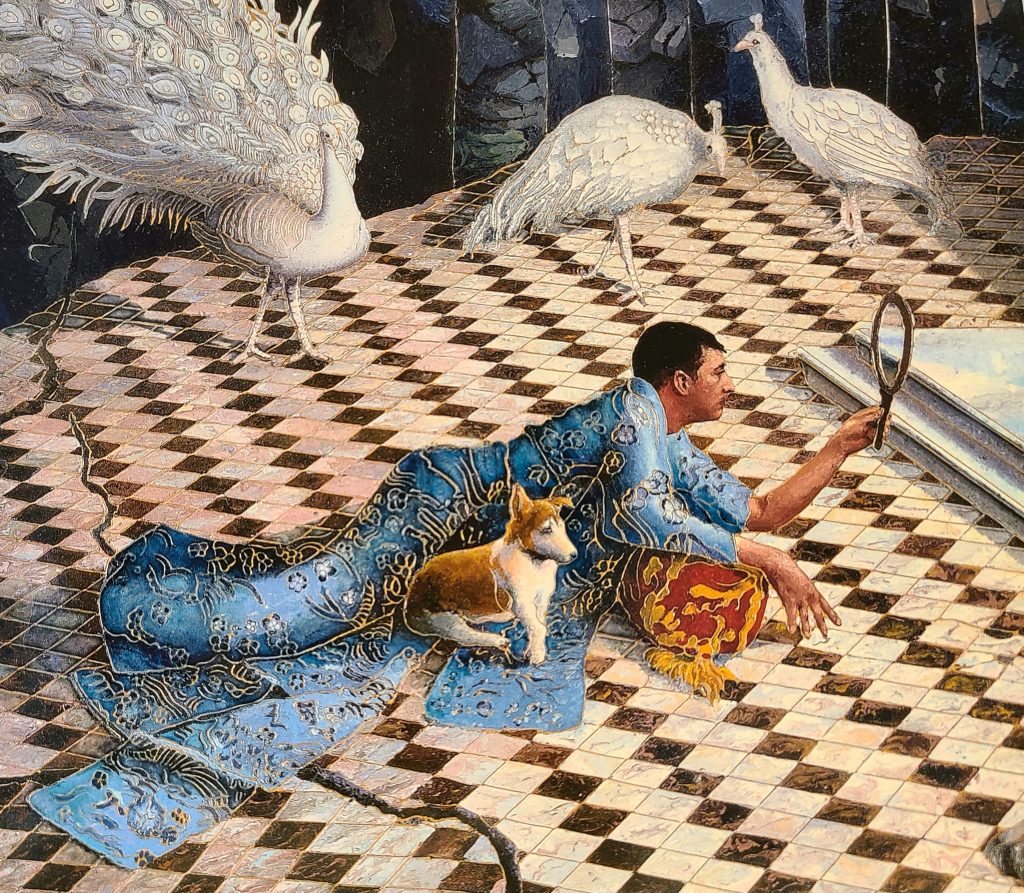
At the Art Institute, Shaw debuts his more-than 100-feet-wide, 21-panel Paradise Lost (2009–25), the artist’s most ambitious and personal project to date. This magnificent allegorical painting takes viewers on a spellbinding journey, from the nocturnal solitude of the artist’s childhood in Kashmir to the frenzied daylight of the art world and the West to finally a fragile, renewed dawn. Each panel is dense with symbolism: mythical beasts, anthropomorphic hybrids, collapsing kingdoms, and natural beauty in various states of transformation. Throughout, the work is dotted with images of the artist, sometimes as a humanoid creature with different animal heads, at another time as a monkey looking with awe at the gleaming edifices and the wealth of the West, and sometimes unambiguously in full human form seated on a bed of saffron under a blossoming cherry tree, lost deep in his thoughts.
Madhuvanti Ghose
Madhuvanti Ghose is the Alsdorf Associate Curator of Indian, Southeast Asian, and Himalayan Art at the Art Institute of Chicago. Prior to joining the Art Institute, Madhuvanti was a lecturer in South Asian Art and Archaeology at the School of Oriental and African Studies, London, and a research fellow at the Ashmolean Museum, Oxford University. She completed her doctoral dissertation at the University of London and has been honored with a 2013 Breaking Barriers Award from the Chicago Foundation for Women and the 2014 Outstanding Community Service Award from the Vishwa Gujarati Samaj, USA.
Architecture
Architectural Style, Mimesis, and ‘Pastiche’
 Francis Morrone – Architectural Historian and Professor at New York University
Francis Morrone is the author of thirteen books, including Guide to New York City Urban Landscapes (W.W. Norton, 2013) and, with Henry Hope Reed, The New York Public Library: The Architecture and Decoration of the Stephen A. Schwarzman Building (W.W. Norton, 2011), as well as architectural guidebooks to Philadelphia and Brooklyn. He was for six and a half years an art and architecture critic for the New York Sun. He is the recipient of the Arthur Ross Award of the Institute of Classical Architecture and Art, of the Landmarks Lion Award of the Historic Districts Council, and of New York University’s Excellence in Teaching Award.
The City of Desire: Mimetic Theory and the Production of Space
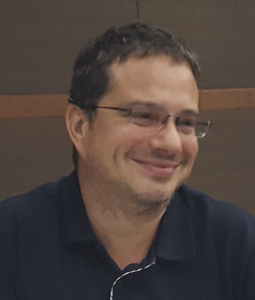 Ivan Blečić
Ivan Blečić is Professor and Head of the Department of Civil & Environmental Engineering and Architecture, University of Cagliari, Italy. He has a twenty-year long teaching experience in urban planning, evaluation and policy. His research interests include planning theory, evaluation methods and decision support for planning and territorial policy, urban economics, and urban modelling and simulation. Together with Paul Dumouchel and Emanuel Muroni, he is developing a research program on mimetic theory and the social production of space.
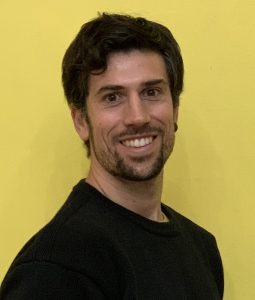 Emanuel Muroni
Emanuel Muroni is an urban planner and researcher at the Department of Civil & Environmental Engineering and Architecture at the University of Cagliari in Italy where he explores the implications of René Girard’s mimetic theory in urban studies, political geography, and the social production of space. He earned his PhD in Architecture and Environment in 2021 with a dissertation titled Urban Spaces as Mimetic Objects.
Introduction to Mimetic Theory
This lecture and discussion will be offered by Grant Kaplan who is a Professor of Theology at St. Louis University. In what has become a COV&R tradition, the conference will begin with an introduction to Girard for participants new to mimetic theory or who welcome a refresher.
 Grant Kaplan
Grant Kaplan is professor of historical and systematic theology at Saint Louis University. He is the author of Answering the Enlightenment: The Catholic Recovery of Historical Revelation (2006), René Girard, Unlikely Apologist: Mimetic Theory and Fundamental Theology (2016), and Faith and Reason through Christian History: A Theological Essay (2022), and co-edited the Oxford History of Modern German Theology. Volume 1: 1781–1848 (Oxford University Press, 2023). He has served on the board of the Colloquium on Violence & Religion and on the editorial board for Contagion: Journal of Violence, Mimesis, and Culture.
Raven Foundation Lecture
Unveiling Conflicting Narratives through Transformative Community Conferencing
David Anderson Hooker, Founder, CounterStories Consulting
 Dr. David Anderson Hooker has over 40 years of experience helping transformation happen as a mediator, community builder, scholar and advocate. He is the author of The Little Book of Transformative Community Conferencing (SkyHorse 2016), co-author (with Amy Potter-Czaijkowski) of Transforming Historical Harms (Eastern Mennonite University 2012) and author of several chapters and articles considering the results of multi-generational trauma, the roles of narratives in identity formation and multi-generational trauma, and restorative justice. He has held academic posts including at the Kroc Institute for International Peace Studies at the University of Notre Dame (2016-2021) and was Assistant Attorney General for the State of Georgia. He is a founding member of the Board of Directors for the Chicago Torture Justice Center helping communities heal from police violence. In all of his preparation, he still believes his best professional training is as an understudy in community theatre and as a student of urban partner dances such as Detroit Urban Ballroom, Chicago Stepping, and the Cleveland Hand dance.