
In this issue: updates about COV&R’s annual meeting and other forthcoming events; powers of church and state; positive and negative mimesis.

Contents
Letter from the President: Nikolaus Wandinger, Which Kind of King?
Editor’s Column: Curtis Gruenler, Positive and Negative Mimesis
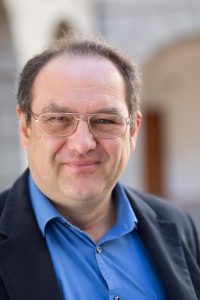
Introducing David Anderson Hooker
Mimesis at the Movies: Charlotte Seven, Online, June 4, 2026
Generative Anthropology Summer Conference, Stockholm, June 22-24, 2026
Creative Interruption: A Theology and Peace Gathering, Chicago, July 7, 2026
Peacemaking and Polarization Sponsored by Sharing Sacred Spaces, Chicago, July 8, 2026
COV&R at the American Academy of Religion, Denver, Nov. 21-24, 2026
Letter From the President
Which Kind of King?
Nikolaus Wandinger
Sometimes the algorithms of social media bring not just banalities and commercials but something interesting to your attention. This happened to me recently when a post by the retired pastor of Mission Basilica San Juan Capistrano, named Arthur Holquin, popped up in my Facebook feed. It was posted on April 15 and is entitled “When the Neophyte Corrects the Vicar of Christ,” relating to Vice President J. D. Vance’s advice to Pope Leo XIV to “be careful when he talks about matters of theology.” I do not know Fr. Holquin, nor am I a follower of his Facebook posts; it seems the algorithm “supposed” that I would be interested in things related to the pope, especially the relationship of the current pope to the U.S. administration, and it was right.
Fr. Holquin focuses in his piece on the irony that a man who has been a Catholic for roughly seven years has the “audacity” to criticize a man who has been Catholic all his 71-year-long life, has been a member of the Augustinian order for 49 years, was at the helm of that order for 12 years, holds a Master of Divinity from Catholic Theological Union in Chicago and a Doctorate in Canon Law from the Pontifical University Thomas Aquinas in Rome, and is now the head of the world Catholic community in the office that is known by Catholics as the Vicar of Christ (the information gathered here is not from Holquin’s entry but from Wikipedia). I concur with all Holquin writes but want to add some thoughts of my own.
First of all, I would caution that it is possible for Catholics to have differences of opinion even with the Bishop of Rome; many do. For some, the pope is too liberal, for others too conservative. And that is not just true of Pope Leo; it has been true of all the popes at least since Paul VI. So, dissenting opinion among Catholics—even short-term Catholics—and their pope is not my problem. Neither would I see a problem if a politician advised the pope to be careful when he talks about politics, although I doubt that it would be necessary to give him that advice. But a politician advising the pope to be careful when he talks about theology does indeed show a disconcerting kind of hubris.
However, and the reason why I am writing about it here, there is more behind it than an overextended ego. There is a fundamental problem in the understanding of the relationship between church and state, and of the role of religion and its leaders in general, and it has to do with mimetic theory and its understanding of religion. While it is true that in some remarks Vice President Vance has given the impression that he wants the pope “to confine himself to the sacristy“ (Holquin in his FB entry), I fear that is only because the stance of the pope is not to the Vice President’s liking. He would see it quite differently if the pope had endorsed the recent military endeavors of the U.S. administration or its immigration policies.
As we have learned, J. D. Vance was supported and endorsed by Peter Thiel, and through Thiel’s lecture series we know that he prefers a Constantinian Christianity to a Christianity exemplified by Mother Teresa. Now, what has become known as Constantinian Christianity is a Christendom that did not hesitate to use the military force of the state in the service of the church, and conversely accorded religious endorsement for military actions by the state. While it is not becoming to us to declare judgment over Emperor Constantine or any of the persons who believed this to be genuinely Christian (“if we had lived in the days of our fathers …” cf. Mat. 23:30 and Girard, Things Hidden since the Foundation of the World, p. 160ff.), we must emphasize that it was a great self-misunderstanding of Christianity, which Girard called “sacrificial Christianity” (ibid., 224-245).
While this should not be simply condemned, Girard did not mean that we should perpetuate that misunderstanding in our day. According to Girard, we could have learned from Christ’s Passion that God is on any victim’s side and therefore God does not advocate for any violence that creates further victims. For Catholics, the Second Vatican Council has encoded that insight of mimetic theory—without knowing or using that theory—in Church doctrine when the council states: “The truth cannot impose itself except by virtue of its own truth, as it makes its entrance into the mind at once quietly and with power” (Dignitatis humanae, no. 1). In my discussion of Peter Thiel’s lectures in last November’s Bulletin, I remarked: “If we look into the history of the Church, we find that its hope to make the state its instrument proved to be a boomerang: in the end, the Church always ended up being instrumentalized by the state and losing its credibility.” Vice President Vance’s advice to the pope is the perfect example of that: a politician who gives the impression that he would subordinate himself in his political acting to the Church in reality endeavors to tell the Church what it should teach and do.
According to Catholic understanding, it is not for the substitute head of a state to decide on what the pope should or should not speak about. The pope is free to decide for himself on what he considers a matter of faith on which he wants to speak out, and he certainly is not constrained to the sacristy. But, as Pope Leo is well aware, truth has nothing more and wants nothing more than the power of its word to convince people. In the case of the pope, this word is supported by the authority of his office but not by any violence or force. And if politicians think they have to act otherwise, that is their responsibility and it is also their right, in as far as their offices gives them the power to do so, but they cannot expect the temporal head of the Church to condone actions that are clearly against the demands of the gospel. In the end, I would argue, it is not about Constantinian vs. Teresa-like Christianity, it is about the question between Pilate and Christ: “What is truth?” Is it that which is enforced by the violence of the king of this world or that to which a different kind of king testified with his life (cf. John 18:36-38)?
Editor’s Column
Positive and Negative Mimesis
Curtis Gruenler
 Over the last few months, I’ve been slowly but eagerly working my way through the Scottish philosopher John Macmurray’s Gifford lectures, delivered in 1952-54 and published in two volumes as The Form of the Personal. I had come across a brief article on this overlooked, out-of-the-mainstream philosopher that made me wonder whether he might help me work out some issues I was coming up against in exploring what I have been calling the agency of friendship (see my Substack). Sure enough, Macmurray ends his introduction with this wonderful invitation: “The simplest expression that I can find for the thesis I have tried to maintain is this: All meaningful knowledge is for the sake of action, and all meaningful action is for the sake of friendship” (The Self as Agent, 15-16).
Macmurray is often linked with personalism, “an intellectual stance,” to quote Wikipedia, “that emphasizes the importance of the human person.” Notable thinkers associated with personalism include the philosophers Max Scheler, Martin Buber, Paul Ricoeur (another Gifford lecturer), and Pope John Paul II; Emmanuel Mounier, founder of the journal Esprit; peace activists A. J. Muste and Martin Luther King, Jr.; and journalist David Brooks. While I hesitate to classify René Girard, he fits well in this group and has explicit links to some of them. Macmurray’s work strikes me as formulated in a way that would make it a congenial philosophical home, as it were, for mimetic theory, though it was published before Girard’s first book and does not pay much attention to imitation. Indeed, Macmurray’s perspective would stand to gain just as much from the alliance, as it would from the scientific work since his time that supports the relational perspective that he and Girard share: Macmurray’s assertion that “the unit of personal existence is not the individual, but two persons in personal relation” (Persons in Relation, 61) and what Girard calls “interdividuality.”
I want to focus here on just one strand of Macmurray’s argument that I find especially helpful. As the mimetic theory community has considered how to talk about alternatives to the mimetic violence of rivalry and scapegoating, it has been common to call the non-violent possibilities “positive mimesis.” This has the virtue of being non-specific, open to the many forms non-violent mimesis might take. Goodness, as Dante would have us imagine, comes in endless variety. But “positive” can also imply an exclusive, binary opposition, which is perhaps one reason for resistance to the term and for not using the term “negative” for violent mimesis (at least, I have not heard it so used). Macmurray, however, describes a more generative polarity of positive and negative, or rather a series of them, that shape personhood.
“The form of the personal,” he writes, “is a positive which contains, subordinates and is constituted by its own negative” (Persons in Relation 217). Positive and negative do not cancel each other out. I call it a polarity rather than a binary to use a geometric rather than arithmetic metaphor, but the poles are not equal and opposite and perhaps no mathematical image will do. The oldest meanings of these terms are in Latin, where they concern language. Only when something has been posited can there be a negation. In Macmurray’s usage, the negative is for the sake of the positive, which has priority. The universe begins, one might say, with a cosmic “Yes,” but humanity begins, in a certain sense that Macmurray unfolds, with saying “No.”
This form operates in multiple ways, both within the self and between persons.
In Macmurray’s account of selfhood, action is positive and knowing, surprisingly, is negative. Meaningful action is constituted by knowledge, but we are agents first and knowing subjects only by our capacity to negate our own action in order to reflect. Our first certainty is that we can act. Macmurray overturns the Cartesian legacy that puts the knowing subject first, and this makes sense for mimetic theory too: mimetic desire impels action, but personhood and freedom as responsible agents follow from being able to inhibit our mimetic responses and reflectively choose our models. Within reflection, for Macmurray, attention is the negative of intention, much as mimetic theory sees intention as desire formed through imitation (perhaps at the physiological level of mirror neurons) that must be interrupted in order to attend and choose. We attend in order to intend, and we intend in order to act freely and responsibly.
“All meaningful action is for the sake of friendship,” Macmurray’s shorthand for mature, loving interdependence. Our knowledge of others as persons contains our impersonal knowledge of them as objects. Our motives in relation to others move between the poles of love and fear. In friendship, then, personal knowledge and love do not simply exclude fear and seeing others as objects but rather contain, subordinate, and are somehow constituted by them. Mimetic theory helps this make sense to me. Rivalry is what it looks like if the negatives predominate: we fear the models of our desires as rivals and see them as obstacles rather than loving them as persons. Friendship, or loving mimesis, puts the positive back in the driver’s seat. Love contains fear by redirecting it from fear of loss to fear of hurting the other. Personal knowledge contains not just our objective knowledge of another as a human being but also our experience of one whose resistance and opposition can be an important component of friendship.
From our total dependence at birth, we develop to the mutual interdependence of equals through what Macmurray calls “the rhythm of withdrawal and return.” In order for an infant to grow in agency, a caregiver must withdraw herself and let the infant do more. From a mimetic perspective, the caregiver becomes a rival for what the infant wants her to do. The return to cooperation at a new level depends on the caregiver’s intention, modeled for the infant, to subordinate this incipient rivalry to loving mutuality. This experience of conflict contained by harmony, once internalized, becomes the basis of dichotomies such as good and evil, beauty and ugliness, real and unreal. The negative has a function realized only by subordination to the positive. Perhaps the same can be said of the relation between acquisitive, conflictual mimesis and positive, loving mimesis.
A mimetic version of this polarity might be easier to see in relationships that are more mutual. What we call healthy competition results from mimetic rivalry subordinated to a shared, mutually beneficial intention. John Lennon and Paul McCartney competed keenly to come up with the best songwriting ideas, but each, in his own style, subordinated rivalry to creative partnership—a dynamic audible in the songs themselves (as explored beautifully by Ian Leslie in John & Paul: A Love Story in Songs). On a larger scale, community subordinates to friendship such practical functions as economy and law, negatives in which we are rivals for finite goods.
When asked what to do about our violence, Girard tended to focus on renouncing acquisitive mimesis. From Macmurray’s perspective, this renunciation can be seen both interpersonally, as a negative contained within and constituting friendship and community, and individually, as the interruption of the mimetic impulse to reciprocity that enables meaningful agency, that is, intentional action guided by reflection or—switching back to Girard—by choosing a model.
Because the Gifford lectures are meant to concern “natural theology,” Macmurray concludes with thoughts about religious knowledge. I would suggest that his non-dualistic approach to the form of the personal could be further grounded theologically from the standpoint of mimetic theory. As Brian Robinette discusses in The Difference Nothing Makes: Creation, Christ, Contemplation, human friendship and loving mimesis between persons have their foundation in God’s free, utterly gratuitous creation, which means that God is not in rivalry with anything that is (as James Alison likes to say). In traditional Christian contemplation, affirmation of God’s mysterious, gracious transcendence and immanence contains and is constituted by the apophatic or negative moment; in the words of Charles Williams (who attributed them to Augustine): this also is Thou, neither is this Thou.
COV&R News
From my Girardian economist friend Tim Huegerich:
A substack post by a behavioral economist has made a splash recently in the debate about AI and the future of work. It cites Girard directly but also refers to a 2024 paper by the author published in a “top five” economics journal. Earlier versions of the paper used the term “mimetic” much more prominently, but it was apparently toned down in the peer review process. Still, it retains classic mimetic examples such as “No matter how many toys they have at home, there is always one that the children want to play with—the toy that the other child is playing with at the time.” They also cite Augustine and even refer obliquely to Cain and Abel.
I didn’t try to follow all the math in these articles, but it’s good to see that someone is doing the experiments and the math and getting positive results.
Book discount: COV&R members can receive a 20% discount on recent books from two series published by Michigan State University Press: Studies in Violence, Mimesis & Culture and Breakthroughs in Mimetic Theory. This includes the most recent title, Così fan tutte, An Opera of Mimetic Revelationby Isabel Díaz-Morlán. In addition, a 30% discount is available on selected titles from the backlist with a purchase of three or more. For more information, please see this page in the members section of the COV&R website. The same page includes a discount code for ordering through Eurospan, which has better shipping rates when ordering from Europe than ordering directly through MSUP.
 Ongoing read-aloud: The read-aloud-and-discuss Girardian Zoom group will continue with From Violence to Blessing: How an Understanding of Deep-rooted Conflict Can Open Paths of Reconciliation by Vern Redekop through mid-August and conclude with a meeting with Vern. In September, the group is planning to begin James Alison’s newest book, You Can, If You Want To: Navigating Christian Faith, Conscience and Matters LGBTQ+. Meetings are Monday nights from 6:30 to 8pm Central Time, with pre-reading chat beginning at 6pm. Julie Shinnick has copies of the book in pdf form if anyone needs one. You can read about the book on its amazon.com page. If you are interested in participating, please email Julie. Newcomers are always welcome.
New podcast: Common Home TV, an Australian Catholic digital media project focused on faith, culture, and social analysis, has released a podcast titled Scapegoat “exploring René Girard’s theory through real-world stories of violence, witchcraft accusations in Papua New Guinea, and communal blame dynamics in Indonesia, before moving into a deeper discussion of mimetic theory with Chris Cotter, whose doctoral work engages Girard directly.”
COV&R 2026 in Chicago

Final Preparations
COV&R 2026 is just weeks away, and we look forward to welcoming colleagues, students, and friends to Chicago for what promises to be an engaging and distinctive conference. This year’s program invites us to explore mimetic theory through performance, visual art, and architecture—while also making the city itself part of the conversation.
If you have not already registered, please do so soon. The June 15 deadline for registering for the cruise and the banquet is approaching.
The conference opens on Wednesday, July 8, with an “Introduction to Mimetic Theory” led by Grant Kaplan, an opportunity especially valuable for graduate students, first-time attendees, and anyone interested in revisiting the foundations of mimetic thought. We then move on to a compelling Raven Foundation Lecture by David Anderson Hooker on transformative community conferencing and conflicting narratives. At 3 pm, the conference concurrent sessions commence.
Across the week, attendees will experience a rich and unusually interdisciplinary program, including:
- the René Girard Lecture by Tania Checchi of the Universidad Iberoamericana
- playwright Emilio Williams’s performative lecture on Elektra and revenge
- an exploration of Paradise Lost by artist Raqib Shaw, currently installed at the Art Institute of Chicago, with Madhuvanti Ghose of the AIC, followed by an in-person museum visit
- lectures on architectural style and mimetic theory by Francis Morrone of New York University and on urban space by Ivan Blečićand Emanuel Muroni of the University of Cagliari
- the Raymund Schwager Memorial Essay Contest presentations
- a theatrical performance of A Steady Rain followed by panel discussion
- and eighty presentations in concurrent sessions spanning the depth and breadth of mimetic theory, with special attention to architecture, art, and theatre.
As always, the conference will also provide ample opportunities for conversation and collegial exchange—from the Wednesday evening welcome reception to Saturday’s Chicago Architecture Center River Cruise and conference banquet.
You are encouraged to review the conference website which has the most recent program updates. Please note that sessions will take place at two downtown Chicago locations: the DePaul University Loop Conference Center and Curtis Hall in the Fine Arts Building. Here is the entire conference schedule at a glance [click through]. The concurrent schedule will be shared by email with all registered participants approximately two weeks before the conference. During the conference, the concurrent session schedule will be accessible via QR codes posted throughout the meeting venue, ensuring the most accurate daily information on each session.
Whether you are joining us for the first time or returning as a longtime member of the COV&R community, we hope you will come ready for stimulating discussion, new connections, and fresh ways of thinking together.
Questions about the plenary and concurrent sessions should be directed to: co*************@***il.com. All other questions should be sent to: Maura Junius.
—Martie Reineke and Maura Junius, Coordinators of COV&R 2026
*****
Schedule at a Glance
Complete, updated information including room locations and speaker biographies will be found on the conference website.
Wednesday, July 8, 2026
DePaul University Loop Conference Center, 1 East Jackson Blvd., Chicago
11:00 am-Noon “Introduction to Mimetic Theory,” Grant Kaplan, St.Louis University
1:00-2:00 pm Raven Foundation Lecture: “Unveiling Conflicting Narratives through Transformative Community Conferencing,” David Anderson Hooker, Founder, CounterStories Consulting
3:00-7:00 pm See Concurrent Schedule for locations and details.
7:00-9:00 pm COV&R Welcome Reception
Thursday, July 9, 2026
Curtis Hall, 10th floor, Fine Arts Building, 410 S.Michigan Ave., Chicago
10:00 am-Noon Theatre Lecture: “Elektra and the Mimetism of Revenge—A Performative Tale,” Emilio Williams, playwright
1:30-3:00 pm The René Girard Lecture: “Idolatry and Aesthetics: the Sacred Refashioning of Space and Time,” Tania Checchi, Universidad Iberoamericana
3:30- 5:00 pm Art Lecture: “Paradise Lost by Raqib Shaw,” Madhuvanti Ghose, Art Institute of Chicago. Respondent: Martha J. Reineke, University of Northern Iowa
5:30-8:00 pm Visit to the Art Institute of Chicago to view “Paradise Lost” and other works
Friday, July 10, 2026
Curtis Hall, 10th floor, Fine Arts Building, 410 S.Michigan Ave. Chicago
9:00-10:30 am Raymund Schwager, SJ Memorial Essay Contest Presentations
11:00am-Noon COV&R Business Meeting
1:30-3:00 pm Architecture Lecture: “Architectural Style, Mimesis, and ‘Pastiche,’” Francis Morrone, New York University
3:30-4:45 pm Architecture Lecture: “The City of Desire: Mimetic Theory and the Production of Space,” Ivan Blečić and Emanuel Muroni, University of Cagliari
5:15-7:30 pm Theatrical Performance and Panel Discussion: “A Steady Rain” by Keith Huff. Actors: Johnny Garcia and Robert Tobin. Panelists: Betsy Hansbrough, Andrew McKenna, Johnny Garcia, and Robert Tobin. Moderator: Maura Junius.
Saturday July 11, 2026
DePaul University Loop Conference Center, 1 East Jackson Blvd. Chicago
9:00 am-4:00 pm See Concurrent Schedule for location and details.
5:30 pm – 7:00pm Boards at 5:15 pm: Chicago Architecture Center River Cruise.
Location: 112 E. Wacker Dr, on the southeast corner of the Michigan Ave. Bridge and Wacker Dr. Descend down the stairs to the river level.
7:00-9:00 pm COV&R Banquet: Chicago Architecture Center, 111 E. Wacker Dr. Enter the CAC through its front door facing the river and Wacker Drive.
*****
Introducing David Anderson Hooker
Suzanne Ross
 The Raven Foundation is delighted to sponsor Dr. David Anderson Hooker at COV&R’s conference in Chicago to deliver this year’s Raven Foundation Lecture, “Unveiling Conflicting Narratives through Transformative Community Conferencing.” Dr. Hooker will provide an overview of his process for conflict transformation, which is informed by mimetic theory and over 40 years’ experience as a mediator, community builder, scholar, and advocate. A former Assistant Attorney General for the State of Georgia, Dr. Hooker’s varied background includes an academic post at the Kroc Institute for International Peace Studies at the University of Notre Dame as Professor of Conflict Transformation and Peacebuilding (2016-2021).
I first encountered David as the author of The Little Book of Transformative Community Conferencing (TCC). I was reading a lot of books about peacebuilding at the time, but this one was different because it provided a roadmap for communities to move from dialogue about problems to an action plan for transformation. It was practical, actionable, hopeful, and I was captivated. As David writes, “Dialogue is almost always necessary, but never sufficient to achieve transformation.”
I am releasing a revised edition of my book, The Wicked Truth: When Good People Do Bad Things, to coincide with this year’s conference. The new edition includes a study guide inspired by Dr. Hooker’s TCC process. I hope you will take advantage of this opportunity to meet a groundbreaking practitioner in the art of conflict transformation! If you’d like to meet Dr. Hooker before the conference, please enjoy my interview with him on The Wicked Truth podcast, Third Things First.
*****
Practitioner Opportunities
COV&R 2026 offers a number of opportunities especially designed for practitioners—members who engage mimetic theory in professional, creative, pastoral, organizational, and community settings beyond the academy. Whether you are new to COV&R or a longtime participant, we invite practitioners to connect, share experiences, and help shape the future of mimetic theory in practice.
This year, we especially want to highlight a practitioner panel, a new Bridge Builder Award sponsored by the Raven Foundation, and a practitioner luncheon.
Practitioner Panel
Join us for a panel discussion featuring mimetic practitioners reflecting on the role mimetic theory has played in their lives and work. Moderated by Martha Reineke, the panel includes Vanessa Avery, Felipe Viana, and Mack Stirling and will explore the theme, “What Mimetic Theory Has Meant to Me in My Life and Work.” The session will take place Wednesday, July 8, at 3:00 pm in Suite 8002 at the DePaul University Loop Conference Center as one of the opening concurrent sessions. All conference attendees are welcome, and we especially encourage practitioners to join the conversation.
The Bridge Builder Award
We are pleased to introduce the Bridge Builder Award, sponsored by the Raven Foundation. Mimetic theory helps illuminate everyday conflicts, relationships, institutions, and possibilities for transformation. Practitioners play an essential role in bringing these insights into lived contexts—in education, mediation, ministry, organizational leadership, restorative justice, and beyond.
The Bridge Builder Award recognizes emerging leaders whose work helps translate mimetic theory into practices that positively shape communities and lives. By honoring these bridge builders, COV&R celebrates the importance of practitioners to the future of mimetic theory and supports their ongoing professional growth, leadership, and mentorship of others.
Practitioner Luncheon
Practitioners are warmly invited to a special luncheon on Saturday, July 11, from 12:45–1:30 pm on the 11th floor of the conference center, hosted by Mack Stirling.
This gathering will offer an opportunity to meet fellow practitioners, share experiences, and discuss how practitioners can strengthen COV&R—and how COV&R can become an even more welcoming home for practitioners. Whether you are deeply involved in applied mimetic work or simply curious to learn more, we hope you will join us.
The boxed lunches cost $18. The selections include a sandwich, wrap, or lavosh with potato chips, a cookie, and bottled water. Lunch selection and payment maybe done separately, but the deadline for both is June 15. DePaul does not allow outside food to be brought in.
Forthcoming Events
Mimesis at the Movies: Charlotte Seven
Online
June 4 at 7:30 PM ET
Theology & Peace presents an online discussion of a new documentary film on the work of the Rev. Dr. Julia Robinson Moore with live Q&A time and discussion with Dr. Robinson Moore. Sign up for free on the Theology and Peace Humanitix host page and follow us there to receive notifications of upcoming events.
Scenic Thinking and Group Behavior: Agency, Identity, Intelligence
19th Annual Generative Anthropology Summer Conference
Stockholm University, Stockholm, Sweden June 22-24, 2026
A call for papers and additional information are available here.
Creative Interruption: Transformative Testimony in Violent Times
A one-day Theology & Peace gathering ahead of COV&R 2026
The DePaul University Loop Campus, Chicago, Illinois July 7, 2026
We are living in an era when violence feels increasingly casual — and increasingly contagious. Many of us know how to name its patterns clearly. We can point to the polarization, scapegoating, dehumanization, and retaliation, and yet we feel uncertain about how to respond without descending into reactivity or numbness. We recognize what violence is doing. What’s less clear is how to live in ways that disrupt its escalation.
Creative Interruption is a one-day gathering for anyone ready to move beyond analysis. Hosted by Theology & Peace and designed for aspiring peacemakers who want to respond to violence without reproducing it. Creative Interruption brings together theological depth, historical nuance, lived practice, and ethical imagination in a setting designed for thoughtful engagement and community conversation.
Morning Presentation: Wolfgang Palaver, “Active Nonviolence at the Center of Just Peace”
Christian peace ethics shifted in recent decades from just war to just peace. The criteria of the just war tradition are still valid but the center of peace ethics now focusses on peace and not on war. At the center of the concept of just peace is active nonviolence. Christians have learned from Gandhi that the Sermon on the Mount focuses not on nonresistance but on active nonviolence. A final part will address what just peace means for the relationship between church and state by referring to Dietrich Bonhoeffer’s interpretation of the katechon (restrainer).
Wolfgang Palaver is Professor Emeritus of Catholic Social Thought at the University of Innsbruck, Austria, where he taught from 2002 until 2023 and where he was also Dean of the Catholic Theological Faculty from 2013 until 2017. He is an expert on the relationship between violence and religion and on Christian peace ethics. He is President of Pax Christi Austria since 2019 and became in March 2025 Personal Representative of the Organization for Security and Co-operation in Europe Chairperson-in-Office on Combating Racism, Xenophobia and Discrimination, also focusing on Intolerance and Discrimination against Christians and Members of Other Religions.
Afternoon Workshop: Center for Story & Witness, “The Role of the Witness in Breaking Cycles of Violence”
The nonprofit Center for Story & Witness is dedicated to cultivating and sharing stories that bear witness to gender-based violence and other injustices. The Center’s co-founders, R. Clifton Spargo and Anne K. Ream, will lead an interactive seminar detailing best practices in generating, collecting, and sharing testimony. In recent years, witness writing and oral testimony have come to be recognized as essential elements in social justice movements. Testimony challenges and rewrites our idea of ourselves and our society. Spargo and Ream will share what they’ve learned through their award-winning testimonial writing program and engage session participants in writing exercises modeled on the workshop. The session will reflect on the role testimony plays in educating the public on social, political, and interpersonal violences and how testimony defines and defends the human rights of victims of violence. Encouraging participants to contemplate acts of bearing witness in their everyday lives, thus blending personal experience and ethical imagination, the session will explore novel ways of incorporating testimony and storytelling into teaching, advocacy, and other professional practices.
During the Q & A session, we will discuss the relationship of creative witness to mimetic violence, the ways testimony and witness disrupt the unanimity of the crowd and diffuse escalation, while also avoiding the negative contagions that solidarity may be prone to.
Register here.
Peacemaking and Polarization
Sponsored by Sharing Sacred Spaces
Across many of the issues polarizing the United States today, we are facing a multi-front mimetic crisis: escalating cycles of imitation, rivalry, scapegoating, and “us–them” thinking that erode trust and civic life. In such conditions, depolarizing requires people who can step outside mimetic binaries—that is, peacebuilders—who understand and interrupt the destructive patterns, to be the bridges across difference.
In this interactive workshop on July 08, 2026 from 9:00 AM – 11:30 AM CDT, Dr. Vanessa Avery will draw on her 10+ years of experience as a bridge-builder doing depolarization work in 8 different cities and with virtual groups online. She will illuminate the process and phenomenon of polarization, its effects on communities and the loss of the “relational middle,” and will teach techniques for engagement across differences that have been time tested and shown to produce positive change.
The workshop will incorporate group practice to build competencies in select fundamental de-polarizing skills.
The workshop will also explore the disposition of the peacemaker – what are the psycho-spiritual competencies required for peacemaking work? How does religion play into peacemaking work, and what kinds of questions aid discernment? Participants will reflect upon common challenges and risks of stepping outside polarized states to consider the personal impacts of peacebuilding work including community norms, interpersonal trust, and the peacemaker’s interior life.
The session will be interactive and practice-forward, leaving participants with tools they can apply in their own institutional and communal contexts, and discernment questions that will fortify their peacebuilding capacity.
BONUS: The workshop is being held in the historic and magnificent Chicago Loop Synagogue. The synagogue is also an architectural marvel which is regularly featured on architecture tours. All workshop participants will be invited to join in a private tour of the synagogue. You can learn about the Chicago Loop Synagogue here.
COV&R at the American Academy of Religion
Denver, Colorado
November 21-24, 2026
Once again, COV&R is sponsoring two sessions. The times given below are tentative. The final schedule will be posted on the conference website.
Session I: “Mimetic Theory, Social Order, and the Question of Identity” (Saturday 9:30-11am)
This session brings together two papers that examine how social and cultural boundaries are constructed, maintained, and challenged.
- “Prison Differentiation, Mimetic Theory, and Dirty Compassion,” Chris Haw, University of Scranton. This paper combines pedagogical, moral, and sociological reflection on teaching mimetic theory in prison and using the theory, in turn, to examine both carceral and national social arrangements. It centers upon the dynamics of purity differentiation as a way to order and resolve chaos, and the conundrum of compassion toward those who are most reviled.
- “Rethinking both metaphysical foundations and anthropological realities: Bridging the Vattimo-Girard debate through the ‘loose ontology’ of Henza culture and the crossing of gendered binaries,” Colby Dickinson, Loyola University Chicago. This essay reframes the debate between Vattimo and Girard—between ‘weak thought’ and anthropological facts—through Okinawa’s Henza culture where identities are established through a ‘loose’ ontology. This ontology presents a mythical-metaphysical reality that structures male-female complimentarity, though also allowing individuals to cross genders for cultural reasons. This essay contrasts ‘loose’ ontology with the ‘strong’ ontologies of western culture/religion where individual identities are ‘fixed’. For his part, Girard defines cultural intelligibility through acts of exclusion (scapegoating), though when the ‘other’ is not a fixed entity—even if an anthropological fact—new possibilities appear for metaphysics in relation to identity. Susan Sered’s reading of Henza culture enables a reimagining of the nominalist-realist dispute replayed in the Vattimo-Girard debate, and provides a solution akin to Martin Jay’s ‘magical nominalism.’ We need neither get rid of metaphysics nor fully identify with it—something Girard had foreseen with profound theological consequences.
Session II: Scarcity, Rivalry, and Faith: Reconsidering Desire in Politics and Theology (Sunday: 9:30-11am)
This session brings together two distinct yet complementary approaches to desire, conflict, and faith. The first paper examines Peter Thiel’s Girardian critique of climate-centered political rationality, focusing on how narratives of scarcity may intensify mimetic rivalry and social conflict. The second paper offers a Kierkegaardian reading of The Brothers Karamazov, exploring the problem of faith through the relationship between Alyosha and Ivan.
- “Mimesis, Growth, and the Politics of Scarcity: Peter Thiel’s Girardian Critique of Climate-Centered Political Rationality,” Julius Trugenberger. This paper examines the elements of René Girard’s mimetic theory that Peter Thiel uses to question the prioritization of environmental politics in parts of the contemporary Western discourse. Recalling the main patterns of Thiel’s long-standing engagement with Girard’s thought, this talk aims at demonstrating that Thiel interprets climate politics not merely as a dispute over environmental facts, but as a structural reorientation of political desire toward managed scarcity. According to a Girardian framework, periods of stagnation or decline intensify mimetic rivalry as social actors compete for increasingly limited goods. Thiel’s critique, as reconstructed in my talk, suggests that political programs willing to accept economic contraction in the name of climate goals risk amplifying precisely these dynamics of envy, resentment, and rivalry. In such conditions, social cohesion becomes fragile, and political conflict is increasingly organized around moralized blame rather than productive cooperation.
- “The Brother’s Karamazov and the Problem of Faith, A Kierkegaardian Perspective,” John Steichen, Boston College. In conversation with Friedrich Nietzsche and René Girard, this paper develops an account of Kierkegaard’s the stages on life’s way and applies them to a reading of Dostoevsky’s The Brothers Karamazov, and especially to the relationship between Alyosha and Ivan Karamazov.
Forthcoming Publication
The Bloomsbury Handbook of Mimetic Theory
The Australian Girard Seminar has for fourteen years been building its series Violence, Desire, and the Sacred with Bloomsbury Academic, now with thirteen volumes and another in preparation. Bloomsbury commissioned the editors of that series (Scott Cowdell, Chris Fleming, and Joel Hodge) to prepare The Bloomsbury Handbook of Mimetic Theory, adding to a huge list (including, e.g., The Bloomsbury Handbook of Korean Cinema).
Scott has been lead editor and reports that, at 70 chapters and 272,500 words, the handbook manuscript has been completed and sent to the publisher.
He advises that the “Copy Editor’s Prize for Excellence in Authorial Compliance with the Bloomsbury Style Guide” goes to Richard van Oort (the “Prize for Non-Compliance” was not awarded since the competition for that accolade was too hotly contested).
Here is the table of contents, to give you an idea of the scope, international reach, and topical richness of this huge undertaking—surely a COV&R milestone. The editors express their profound thanks to all who have contributed. Publication is currently expected in February 2027. Watch this space for further details.
Introduction
The Editors
Biographical Introduction to René Girard
Cynthia L. Haven
Section 1: Explaining Central Concepts in Mimetic Theory
Three Main Themes
-
- Desire and the Self, Curtis Gruenler
-
- Violence, Culture, and Religion, Anthony Bartlett
-
- The Bible and Demystification, Scott Cowdell
Beginning, Middle—and End?
-
- Evolution and Hominization, Paul Gifford
-
- Conversion, Sarah Bachelard
-
- Apocalypse, Stephen Gardner
Section 2: Girard and …
-
- Augustine, Ann W. Astell
-
- Roland Barthes, Scott Cowdell
-
- Jacques Derrida, Andrew J. McKenna
-
- Feodor Dostoevsky, Chris Fleming
-
- Émile Durkheim, Jean-Pierre Dupuy
-
- Sigmund Freud, Martha J. Reineke
-
- Martin Heidegger, Emanuele Antonelli
-
- Claude Levi-Strauss, Thomas Ryba
-
- Emmanuel Levinas, Sandor Goodhart
-
- Friedrich Nietzsche, George A. Dunn
-
- Marcel Proust, Andrew J. McKenna
-
- Jean-Paul Sartre, Stephen L. Gardner
-
- Raymund Schwager, Nikolaus Wandinger and Józef Niewiadomski
-
- William Shakespeare, Richard van Oort
-
- Simone Weil, Ann W. Astell
Section 3: Academic Disciplines and Mimetic Theory
-
- Aesthetics, Tania Checchi
-
- Ancient History, Marinela C. Blaj
-
- Anthropology, Mark Anspach
-
- Archaeology and the Neolithic, Paul Gifford and Pierpaolo Antonello
-
- Biblical Studies, Grant Kaplan and Michael Kirwan
-
- Classics, Sandor Goodhart
-
- Cognitive Science, Scott Garrells and Mark R. Anspach
-
- Economics, André Orléan
-
- Film Studies, David Humbert
-
- History, Mathias Moosbrugger
-
- Literature, William A. Johnsen and Trevor Cribben Merrill
-
- Philosophy, Paolo Diego Bubbio and Chris Fleming
-
- Political Science and International Relations, Elisabetta Brighi
-
- Psychology, Kathryn M. Frost
-
- Semiotics, Anthony Bartlett
-
- Sociology, Michał Łuczewski
-
- Theology, Grant Kaplan
Section 4: Mimetic Theory and Non-Christian Religions
-
- World Religions, Michael Kirwan
-
- Hinduism and Buddhism, Brian Collins
-
- Islam, Adnane Mokrani
-
- Judaism, Sandor Goodhart
Section 5: Issues for Mimetic Theory
-
- Artificial Intelligence, Paul Dumouchel
-
- Colonialism, Jaisy A. Joseph
-
- Digital Media, Geoff Schullenberger
-
- Disability, Susan McElcheran
-
- Feminism, Chelsea Jordan King
-
- Nonviolence, Wolfgang Palaver
-
- Popular Culture, Ryan G. Duns
-
- Populism, Marcia Pally
-
- Postmodernity and Deconstruction, Nidesh Lawtoo
-
- Race, Julia Robinson Moore
-
- Religious Extremism, Joel Hodge
-
- Same Sex/LGBTQIA+, James Alison
-
- Secular Modernity, Scott Cowdell
-
- War and Terror, Duncan Morrow
Section 6: Mimetic Theory Around the World
-
- The Anglosphere, William A. Johnsen
-
- Central and South America, Mario Roberto Solarte Rodriguez
-
- China, Xianghui Liao
-
- Dutch/Flemish, Erik Buys
-
- Central and Eastern Europe, Adam Romejko
-
- French-speaking, Benoît Chantre (adapted by William A. Johnsen)
-
- German-speaking, Dietmar Regensburger
-
- Italian-speaking, Luca Guglielminetti and Marta Ferronato
-
- Spanish-speaking, Ángel Barahona and David Garcia-Ramos
Section 7: Practical Implications and Applications of Mimetic Theory
-
- Friendship, Curtis Gruenler
-
- Peacemaking and Reconciliation, Vern Neufeld Redekop and Rebecca J. Adams
-
- Preaching, Paul Nuechterlein
-
- Spirituality, Brian D. Robinette
Index